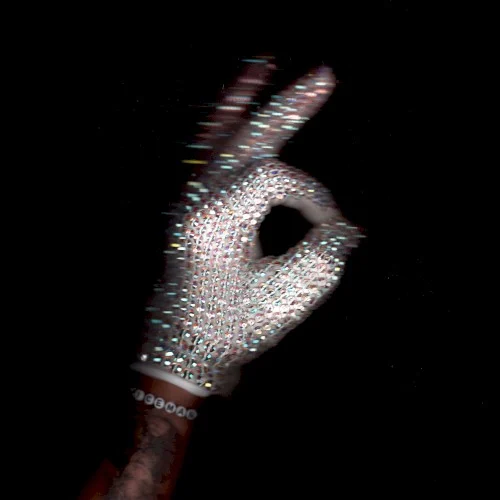
Television gave Aubrey Drake Graham his first large audience before music gave him a way to narrate himself. The Toronto native spent his adolescence playing Jimmy Brooks on Degrassi: The Next Generation while recording mixtapes away from the set, beginning with Room for Improvement and Comeback Season. So Far Gone changed the equation in 2009. “Best I Ever Had” reached No. 2 on the Billboard Hot 100, but the more consequential shift was in the voice surrounding it. Drake could rap with technical precision, slip into melody without announcing the transition and write about ambition, sex, insecurity and status as overlapping conditions rather than separate subjects. Lil Wayne brought him into Young Money, but the music was already suggesting that the boundaries between rapper, R&B singer and diarist were becoming less useful.
Thank Me Later debuted at No. 1 on the Billboard 200 in 2010, while Take Care gave the early career its defining atmosphere a year later. Working closely with Noah “40” Shebib and drawing from the nocturnal R&B developing around Toronto, Drake favored negative space, submerged drums and vocals that could turn from guarded confidence to romantic resentment inside the same song. “Marvins Room” made an intoxicated late-night phone call feel simultaneously vulnerable and selfish, while the album won the Grammy for Best Rap Album. Nothing Was the Same followed with “Started From the Bottom” and “Hold On, We’re Going Home,” then If You’re Reading This It’s Too Late tightened the rapping in 2015. By that point, Drake’s refusal to choose between melody and bars was no longer unusual at the top of hip-hop. It had become part of the genre’s commercial grammar.
Toronto remained the center even as the records became increasingly international. Views placed the CN Tower directly on its cover and produced “One Dance,” Drake’s first Hot 100 No. 1 as a lead artist, through a rhythm shaped by dancehall and Afrobeats. More Life loosened the album format into what he called a playlist, moving through UK rap, grime, dancehall and South African house, while Scorpion divided rap and R&B impulses across two discs and produced “God’s Plan,” “Nice for What” and “In My Feelings.” Later projects kept testing how much one Drake release could contain. Honestly, Nevermind leaned into house music, Her Loss with 21 Savage returned to harder rap exchanges, and For All the Dogs sprawled across another guest-heavy set. Even when the influences traveled, Toronto repeatedly supplied the imagery, collaborators and sense of place pulling the work back toward home.
The 2024 battle with Kendrick Lamar changed the context around that dominance without slowing Drake’s release habits. $ome $exy $ongs 4 U with PARTYNEXTDOOR arrived in 2025, then May 15th, 2026 turned excess into the structure itself. Drake released ICEMAN, HABIBTI and MAID OF HONOUR simultaneously, totaling 43 songs and becoming the first artist to occupy the top three positions of the Billboard 200 in the same week with three newly released albums. ICEMAN carries much of the harder rap material and post-feud tension, while HABIBTI moves through fragmented R&B and melodic experiments. MAID OF HONOUR returns to the dance-floor impulse of Honestly, Nevermind through Miami bass, footwork and ghettotech rather than atmospheric house. The rollout turned Toronto into part of the release mechanism itself, using livestreams, an enormous downtown ice installation, the illuminated CN Tower, fireworks and music videos filmed around the city.
FOMO has made the year larger instead of closing it. Premiered September 15th and later restored to Drake’s YouTube channel after briefly disappearing, the self-financed film runs just over an hour and combines music videos, surreal episodes, celebrity cameos, Toronto locations and nine new or previously unheard musical moments. Don Toliver, Yeat and PARTYNEXTDOOR appear among the new collaborations, while the film revisits imagery connected to earlier Drake videos and folds material from HABIBTI and MAID OF HONOUR into the same visual stream. At its Toronto premiere, Drake also confirmed plans for a 2027 world tour, although dates and venues have not yet been announced. The title Fear of Missing Out lands neatly beside a catalog that has rarely relied on scarcity. Drake’s career has repeatedly answered one release with another, expanded albums instead of shrinking them and treated constant circulation as part of the work itself. In 2026, three albums did not conclude the conversation. They became the raw material for a film, nine more musical glimpses and the road ahead.